
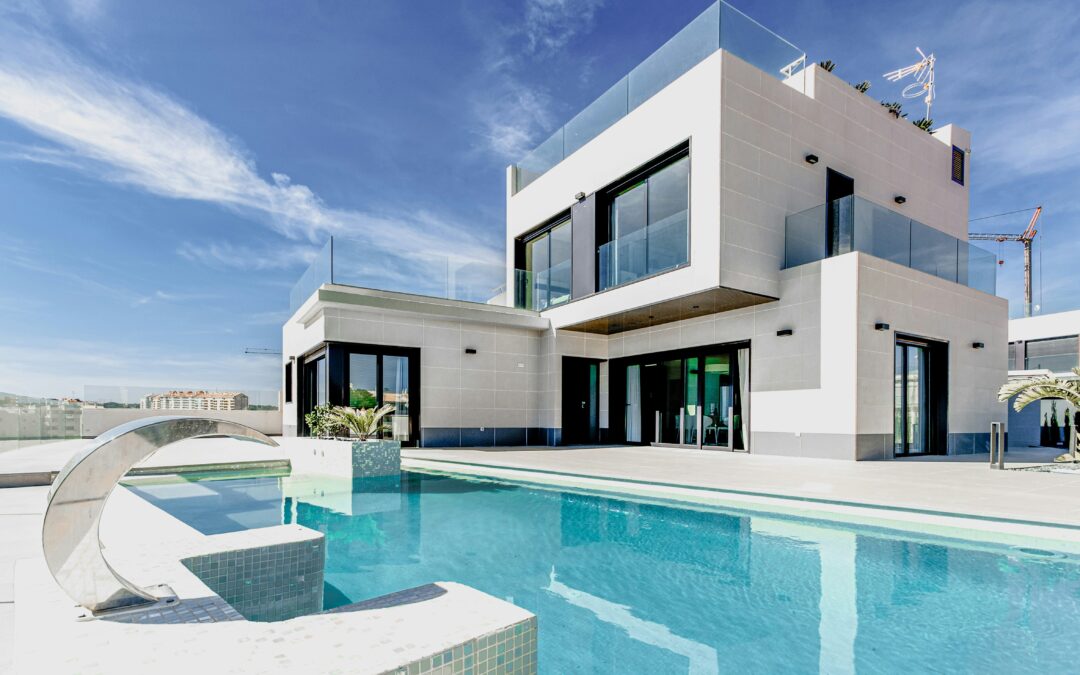
Buying a villa with a swimming pool in Spain is a dream for many overseas buyers. Whether you are looking for a holiday home on the Costa del Sol, a family villa in Alicante or a property in the Balearic Islands, you may be wondering whether a Spanish bank will lend you the money to make it happen.
The good news is that Spanish mortgages are available to many overseas buyers purchasing villas with private swimming pools. You do not necessarily need to live in Spain or earn your income in euros to qualify.
However, getting a mortgage is not always straightforward. Your deposit, income, country of residence, existing financial commitments and the property’s valuation can all influence how much you can borrow.
In this guide, Your Spanish Mortgage explains what international buyers need to know before financing a Spanish villa.
Is it easy to get a Spanish mortgage for a villa?
It can be relatively straightforward if your finances are strong, you have a sufficient deposit and the property meets the lender’s requirements. However, approval is never guaranteed.
Spanish banks do lend to non-residents, including buyers living in the UK, the USA and other countries. Nevertheless, not every lender accepts every type of overseas application, and the terms available to non-residents can differ from those offered to Spanish residents.
Lenders will typically assess:
- Your income and employment or business stability.
- Your existing mortgages, loans and other financial commitments.
- The amount of deposit you can contribute.
- Your country of residence and the currency in which you earn.
- Your age and the proposed mortgage term.
- The value, legal status and characteristics of the villa.
A property with a swimming pool is not automatically a problem for a mortgage application. What matters is whether the lender is comfortable with the property as security and whether your finances meet its lending criteria.
Are Spanish banks keen to lend to overseas buyers?
Yes, Spanish lenders do offer mortgages to overseas buyers. International purchasers are an established part of Spain’s property market, particularly in popular coastal destinations.
However, banks assess applications according to their own commercial policies and risk criteria. They are not obliged to lend simply because you are buying a property in Spain.
Non-resident applicants may be asked to provide more documentation than local borrowers. Lenders need to understand income earned abroad, existing financial commitments in another country and the source of the money being used for the deposit.
Some lenders are more experienced in dealing with international buyers than others. Finding a lender whose criteria fit your circumstances can therefore be just as important as finding the right property.
A specialist Spanish mortgage broker can help you explore potential options before you commit to a purchase.
How much deposit do you need to buy a villa in Spain?
For many non-resident buyers, a sensible starting point is to budget for a deposit of around 30%–40% of the property’s purchase price, plus purchase taxes and associated costs.
This is an indicative planning range rather than a fixed rule. The amount available depends on the lender, your financial profile, residency status and the property’s valuation.
For example, if you are buying a villa for €400,000, the figures could look like this:
| Mortgage percentage | Mortgage amount | Your deposit |
|---|---|---|
| 60% | €240,000 | €160,000 |
| 65% | €260,000 | €140,000 |
| 70% | €280,000 | €120,000 |
These examples exclude purchase taxes, legal fees, valuation costs and other expenses.
You should also be aware that the bank may calculate its lending percentage using the lower of the agreed purchase price and its own valuation. If the valuation comes in below the price you have agreed to pay, you may need to contribute additional funds.
Top tip: Establish your likely mortgage budget before making an offer on a villa. This will help you understand your total cash requirement and avoid committing to a property that is difficult to finance.
Does having a swimming pool affect your mortgage?
A private swimming pool does not automatically make a villa harder to finance. However, the lender will assess the property as a whole.
The valuation is an important part of the mortgage process. The bank needs to establish whether the property provides suitable security for the loan.
Depending on the circumstances, relevant considerations may include:
- The property’s location and condition.
- The size, layout and overall market value of the villa.
- Whether the pool and other structures are properly documented.
- Whether there are planning or registration issues.
- Whether the property valuation supports the agreed purchase price.
If the villa has an extension, an outbuilding or a swimming pool that raises questions about planning permission or legal documentation, your independent Spanish property lawyer should investigate the issue.
This is particularly important when buying older villas, rural properties or homes that have been extended or altered over time.
A beautiful property is not necessarily a straightforward mortgage security, so legal checks should form part of your buying process.
Can you get a Spanish mortgage if you live in the UK or USA?
Yes, potentially. Both UK-based and US-based buyers may be eligible for a Spanish mortgage, subject to the lender’s criteria.
You do not necessarily need to be employed in Spain or have Spanish residency.
However, lenders may have different policies depending on your country of residence and the source of your income.
For example, a UK resident earning pounds sterling may be assessed differently from an American applicant earning US dollars. In both cases, the lender will want evidence of income and may consider exchange-rate risk when calculating affordability.
If you are self-employed, own a business or receive income from several sources, you may need to provide additional documentation.
The best approach is to establish which lenders may consider your circumstances before you start the formal application process.
What income do you need to qualify?
There is no single salary requirement that applies to every Spanish mortgage.
Instead, lenders assess your income alongside your existing commitments and the proposed mortgage repayments. They will want to establish that you can afford the loan without placing excessive pressure on your finances.
For example, a buyer with a high income but substantial existing debts may have less borrowing capacity than someone earning less but with fewer financial commitments.
Your income may include salary, self-employed earnings, dividends, pension income or other sources accepted by the lender.
You will generally need to provide documents to verify your earnings, such as payslips, tax returns, accounts and bank statements.
What additional costs should you budget for?
Your deposit is only one part of the cost of buying a Spanish villa.
You should also allow for the applicable property purchase tax, legal fees, valuation costs and other transaction expenses. The amount varies according to the region, the type of property and the circumstances of the purchase.
For initial planning, some buyers budget approximately 10%–13% of the purchase price for taxes and associated costs, although this is only a broad estimate and may be higher or lower depending on the transaction.
For a €400,000 villa, that would represent a further €40,000–€52,000 on top of your deposit.
Remember to consider the ongoing costs of owning a villa with a pool, including maintenance, utilities, insurance, gar
Recent Comments