
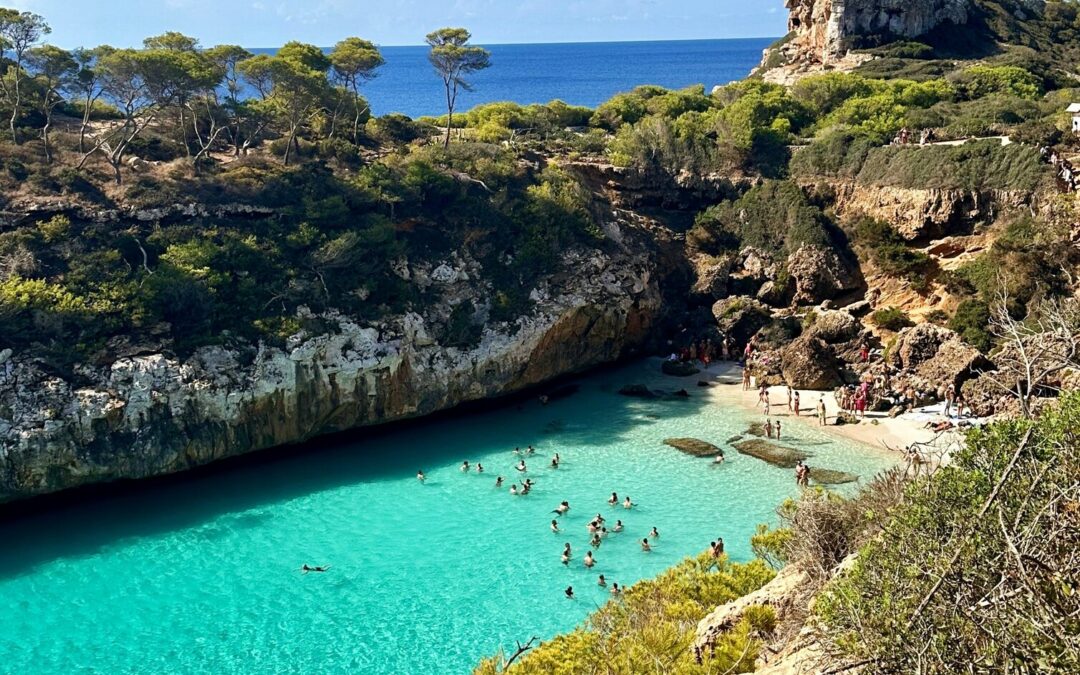
Why Wealthy Germans Are Buying Property in Mallorca – And How to Finance a €1 Million Spanish Mortgage
For generations, Mallorca has been one of the favourite Mediterranean destinations for German holidaymakers. But for many affluent Germans, the relationship with the island goes far beyond a summer holiday.
Increasingly, Mallorca represents an opportunity to own a second home in one of Europe’s most attractive Mediterranean destinations, enjoy a better quality of life and establish a long-term connection with Spain.
From spectacular sea-view villas in Port d’Andratx to elegant country estates in the Mallorcan countryside, the island attracts German entrepreneurs, business owners, professionals, retirees and high-net-worth families looking for something more than an ordinary holiday property.
And there is an important financial consideration: you do not need to be a Spanish resident to buy a property or obtain a Spanish mortgage.
German nationals living in Germany can apply for Spanish property finance, including substantial mortgages of €1 million or more, subject to the bank’s lending criteria.
In this guide, we explore why Germans love Mallorca, where they buy, how the purchasing process works and how wealthy German buyers can finance a luxury property using a Spanish mortgage.
1. Why do Germans love Mallorca?
Mallorca has a particularly strong relationship with Germany. German visitors have been travelling to the island for decades, and many have developed such a strong attachment that they eventually decide to purchase property there.
There are several reasons behind this popularity.
The Mediterranean lifestyle
Mallorca offers a lifestyle that is difficult to replicate in northern Europe.
More than 300 days of sunshine a year are often associated with the island, alongside beautiful beaches, marinas, golf courses, excellent restaurants and an outdoor lifestyle.
For wealthy Germans accustomed to busy professional lives, the opportunity to spend time in a Mediterranean villa, enjoy outdoor dining and escape the colder German winters is particularly attractive.
Easy connections with Germany
Mallorca is exceptionally well connected to Germany.
Palma de Mallorca Airport offers extensive connections to major German cities, including Frankfurt, Munich, Düsseldorf, Berlin and Hamburg, with seasonal routes and frequencies varying throughout the year.
This makes Mallorca particularly convenient for German business owners and professionals who want a second home without being completely disconnected from their business interests in Germany.
A long weekend in Mallorca or a few weeks working remotely from a Mediterranean villa can be much easier to organise than travelling to a more distant destination.
A familiar international community
Another important attraction is that Germans are not newcomers to Mallorca.
The island has an established German-speaking community, German businesses, international schools and services catering to Central European residents.
For buyers considering a permanent move, this can make the transition considerably easier.
Excellent infrastructure and quality of life
Mallorca is not simply a seasonal holiday destination.
Palma offers international healthcare facilities, private medical services, shopping, restaurants and cultural attractions. The island also has international education options and a well-developed transport infrastructure.
For families, retirees and internationally mobile professionals, these factors are important when choosing somewhere to spend a significant amount of time.
2. Do Germans actually live in Mallorca?
Yes. Mallorca has a substantial German expatriate and resident community.
Some Germans have relocated permanently, while others divide their time between Germany and Spain. Many own second homes that they use during holidays, weekends and extended stays.
There is also a considerable difference between buying a holiday home and becoming a Spanish resident.
You can own a property in Mallorca while continuing to live and pay tax in Germany.
Buying a Spanish property does not automatically make you a Spanish tax resident.
However, if you spend more than 183 days in Spain during a calendar year, or your principal economic interests or other relevant circumstances are located there, Spanish tax residency may become an issue. Your individual position should be reviewed with a cross-border tax adviser.
For wealthy Germans, this distinction is particularly important when planning the ownership of a second home, managing investments and deciding how much time to spend in Spain.
3. German buyers are an important part of Mallorca’s luxury property market
German buyers are not just a small international segment of the Mallorca property market.
They are one of its most important buyer groups.
According to reporting on the Spanish College of Registrars’ 2025 figures, German nationals accounted for approximately 39% of foreign property purchases in the Balearic Islands, making Germany the leading foreign buyer nationality.
The Balearics also recorded a particularly high proportion of foreign purchases involving properties priced at €500,000 or more.
This demonstrates the importance of international demand, particularly in the higher-value property market.
For affluent German purchasers, Mallorca offers a combination of established international demand, limited prime coastal locations and an attractive lifestyle proposition.
4. Where do wealthy Germans buy property in Mallorca?
Although German buyers can be found throughout the island, certain areas have particularly strong appeal.
Port d’Andratx – Luxury villas and exclusive waterfront living
Port d’Andratx is one of Mallorca’s most prestigious property destinations.
<PRIVATE_IMAGE>
The area is particularly popular with wealthy international buyers looking for sea-view villas, privacy, luxury marinas and high-end restaurants.
Properties can range from sophisticated apartments to exceptional villas costing several million euros.
For German entrepreneurs and high-net-worth individuals seeking a prestigious Mediterranean residence, Port d’Andratx is an obvious place to consider.
Santa Ponsa – Golf, marinas and family living
Santa Ponsa is another established international property destination.
It offers golf courses, beaches, marinas, restaurants and a large selection of villas and apartments.
Its location in the southwest also provides convenient access to Palma and other popular coastal areas.
Santa Ponsa can be particularly attractive to German families looking for a second home that offers both relaxation and practical amenities.
Bendinat and Portals Nous – Exclusive residential locations
Bendinat and Portals Nous are known for their upmarket residential developments, golf facilities and proximity to Puerto Portals marina.
These areas attract internationally mobile professionals, wealthy families and buyers looking for sophisticated properties close to Palma.
Deià and Sóller – Traditional Mallorca and countryside living
For buyers who prefer authenticity, privacy and beautiful natural surroundings, Deià and Sóller offer something quite different.
Traditional stone houses, renovated fincas and properties with spectacular mountain views make these locations particularly appealing to buyers who want a more relaxed Mediterranean lifestyle.
Santanyí – Space, privacy and traditional character
On Mallorca’s southeast coast, Santanyí has become increasingly attractive to international buyers.
Its traditional architecture, countryside properties, beaches and quieter atmosphere appeal to purchasers looking for privacy and a connection with the island’s traditional character.
5. Can German citizens get a mortgage in Mallorca?
Absolutely.
One of the biggest misconceptions among international property buyers is that they must become Spanish residents before applying for a Spanish mortgage.
This is not the case.
German nationals living in Germany can apply for a Spanish non-resident mortgage to purchase a holiday home or investment property in Mallorca.
Spanish banks regularly consider applications from international buyers, including people whose salaries, businesses, investments and assets are based outside Spain.
For affluent German buyers, this opens up an opportunity to purchase a high-value property without having to finance the entire transaction using cash.
How much can a German non-resident borrow?
Spanish mortgage lending depends on the applicant’s financial circumstances, the property and the lender.
As a general indication, non-resident mortgages may be available at approximately 60%–70% loan-to-value (LTV), although some lenders may offer less depending on the circumstances.
For a high-net-worth German purchaser, the figures could look like this:
| Property purchase price | Mortgage at 60% LTV | Cash deposit |
|---|---|---|
| €1,000,000 | €600,000 | €400,000 |
| €1,500,000 | €900,000 | €600,000 |
| €1,700,000 | €1,020,000 | €680,000 |
| €2,000,000 | €1,200,000 | €800,000 |
| €2,500,000 | €1,500,000 | €1,000,000 |
These figures are illustrative rather than guaranteed lending offers. The bank will also assess the property’s valuation, and the buyer must budget separately for purchase taxes and associated costs.
Can a German buyer obtain a €1 million mortgage in Spain?
Yes.
A €1 million Spanish mortgage is possible for an eligible German applicant, although it is generally treated as a high-value mortgage application rather than an ordinary residential mortgage.
For example, imagine a German business owner purchasing a €1.7 million villa in Port d’Andratx.
Rather than using the entire purchase price from personal investments or business assets, they may wish to arrange a €1 million Spanish mortgage and contribute the remaining funds themselves.
This could allow the buyer to retain more capital for other investments, business activities or financial commitments.
The bank will assess the applicant’s income, existing liabilities, assets, deposit and overall financial position.
For particularly substantial mortgages, some lenders may also consider applications through their private banking or high-net-worth lending divisions.
6. What do Spanish banks look for when lending to German buyers?
Spanish banks can accept income earned in Germany, but they need to understand the applicant’s financial position.
For a German non-resident applying for a substantial mortgage, lenders may consider:
- German employment income and salary.
- Business ownership and company profits.
- Dividends and investment income.
- Rental income from existing properties.
- Pension income, where applicable.
- Existing mortgages and personal financial commitments.
- Savings, investments and available deposit funds.
- The source of funds being used for the purchase.
Business owners and entrepreneurs may need to provide company accounts, tax returns and additional financial documentation.
High-net-worth applicants may have more complex financial arrangements involving several companies, investment portfolios or international income streams.
A specialist mortgage broker can help identify lenders whose requirements are compatible with the applicant’s circumstances.
7. What documents does a German buyer need?
Although the exact requirements vary between Spanish banks, German applicants should generally expect to provide:
- A valid passport.
- Spanish NIE (Número de Identidad de Extranjero).
- Recent German bank statements.
- Payslips or evidence of business income.
- German tax returns or relevant tax assessments.
- Details of existing mortgages and other liabilities.
- Evidence of savings and deposit funds.
- Details of the property being purchased.
Self-employed applicants and company directors may need to provide additional company accounts and financial statements.
German-language financial documents may need to be translated, depending on the lender’s requirements.
Starting the mortgage process early is particularly important when purchasing a luxury property, as high-value applications can require more detailed underwriting.
8. Why use a Spanish mortgage instead of buying entirely with cash?
Many affluent German buyers have sufficient capital to purchase a Mallorca property without borrowing.
However, that does not necessarily mean paying entirely in cash is the best financial decision.
A Spanish mortgage can offer several potential advantages.
Preserving investment capital
Rather than liquidating investments or withdrawing funds from a business, buyers can use mortgage finance to retain more of their existing capital.
Diversifying assets
A mortgage can allow buyers to spread their wealth across property, investments and business interests rather than concentrating a large proportion of their assets in one property.
Financing a more valuable property
Mortgage finance may allow buyers to consider a higher-value villa or a more desirable location than would otherwise be practical.
Managing liquidity
For entrepreneurs and business owners, maintaining access to capital can be particularly important.
Of course, borrowing also introduces interest costs, repayment obligations and exposure to interest-rate movements. The right approach depends on the buyer’s wider financial strategy.
9. What about buying a property in Mallorca as a German resident?
The purchasing process is relatively straightforward for EU citizens, although professional legal and tax advice is essential.
A typical purchase involves:
- Obtaining a Spanish NIE number.
- Identifying a suitable property and agreeing a purchase price.
- Appointing an independent Spanish property lawyer.
- Completing legal and property due diligence.
- Arranging the mortgage, if required.
- Signing the purchase deed before a Spanish notary.
- Registering the property in the Spanish Land Registry.
- Paying the applicable purchase taxes and associated costs.
German nationals do not need to establish Spanish residency to complete these steps.
However, buyers should consider Spanish property taxes, ongoing ownership expenses, inheritance planning and their German tax position before purchasing.
It is also important to understand that holiday rental permissions are not automatic. Anyone planning to rent out their property should obtain specialist advice on the applicable local licensing rules before relying on rental income.
10. Arrange a €1 Million Spanish Mortgage for Your Mallorca Property
Mallorca continues to attract wealthy German buyers who want to combine an exceptional lifestyle with ownership of a property in one of Europe’s most desirable Mediterranean destinations.
Whether you are considering a €1 million apartment in Palma, a €1.7 million villa in Santa Ponsa or a multi-million-euro estate in Port d’Andratx, Spanish mortgage finance may allow you to structure the purchase without committing all your available capital.
At Your Spanish Mortgage, we specialise in helping international buyers explore Spanish mortgage options, including substantial mortgages for luxury properties and second homes.
We understand that high-net-worth applicants often have more complex financial arrangements than standard residential mortgage customers.
Our approach is to assess your circumstances, understand your borrowing requirements and identify suitable Spanish lenders.
You do not need to live in Spain to explore your mortgage options.
Looking to buy a luxury property in Mallorca?
If you are a German resident considering a Spanish mortgage of €1 million or more, contact Your Spanish Mortgage to discuss your requirements.
Find out more about our €1 million Spanish mortgage solutions and discover how specialist mortgage advice can help you finance your property purchase in Spain.
Frequently Asked Questions
Can German citizens buy holiday homes in Mallorca?
Yes. German nationals can freely purchase residential property in Mallorca as EU citizens. They do not need to become Spanish residents to own property.
Can I get a Spanish mortgage if I live in Germany?
Yes. Spanish banks offer mortgages to non-residents, including German nationals with income and assets based in Germany. Lending is subject to the bank’s affordability and underwriting requirements.
Can a German citizen get a €1 million mortgage in Mallorca?
Yes. Spanish lenders may consider mortgage applications of €1 million or more from financially strong German applicants. The amount available depends on income, assets, liabilities, deposit and the property’s valuation.
How much deposit do German buyers need?
Non-resident buyers may typically need a deposit of around 30%–40% of the property’s value, although requirements vary between lenders. Purchase taxes and other transaction expenses must be budgeted separately.
Do I have to live in Mallorca to get a mortgage?
No. You can apply for a Spanish non-resident mortgage while continuing to live and work in Germany.
Are there many Germans living in Mallorca?
Yes. Mallorca has an established German-speaking community, including permanent residents, retirees, entrepreneurs and people who divide their time between Germany and Spain.
Which parts of Mallorca are popular with wealthy German buyers?
Popular locations include Port d’Andratx, Santa Ponsa, Bendinat, Portals Nous, Deià, Sóller and Santanyí. The best location depends on whether the buyer prioritises a marina, golf, privacy, countryside or proximity to Palma.
Is buying property in Mallorca a good investment?
Mallorca has an established international property market and strong demand in many prime locations. However, property investment carries risks, and buyers should assess purchase costs, taxes, liquidity, maintenance and future resale prospects rather than assume prices will always rise.
Your Spanish Mortgage – Specialist Mortgage Advice for International Property Buyers
Explore your options for a €1 million or larger Spanish mortgage, whether you are purchasing a luxury villa, a second home or an investment property in Mallorca.
Recent Comments